Digital Destiny: Navigating Europe’s Sovereignty Challenge – A Framework for Control

With the geopolitical changes since Trump took office, I’ve been following developments in digital sovereignty and have seen the industry’s response to Europe’s strategic demands through various InfoQ news items.

Today, Europe and the Netherlands find themselves at a crucial junction, navigating the complex landscape of digital autonomy. The recent introduction of the EU’s new Cloud Sovereignty Framework is the clearest signal yet that the continent is ready to take back control of its digital destiny.

This isn’t just about setting principles; it’s about introducing a standardized, measurable scorecard that will fundamentally redefine cloud procurement.

The Digital Predicament: Why Sovereignty is Non-Negotiable

The digital revolution has brought immense benefits, yet it has also positioned Europe in a state of significant dependency. Approximately 80% of our digital infrastructure relies on foreign companies, primarily American cloud providers. This dependence is not merely a matter of convenience; it’s a profound strategic vulnerability.

The core threat stems from U.S. legislation such as the CLOUD Act, which grants American law enforcement the power to request data from U.S. cloud service providers, even if that data is stored abroad. Moreover, this directly clashes with Europe’s stringent privacy regulations (GDPR) and exposes critical European data to external legal and geopolitical risk.

As we’ve seen with incidents like the Microsoft-ICC blockade, foreign political pressures can impact essential digital services. The possibility of geopolitical shifts, such as a “Trump II” presidency, only amplifies this collective awareness: we cannot afford to depend on foreign legislation for our critical infrastructure. The risk is present, and we must build resilience against it.

The Sovereignty Scorecard: From Principles to SEAL Rankings

The new Cloud Sovereignty Framework is the EU’s proactive response. It shifts the discussion from abstract aspirations to concrete, auditable metrics by evaluating cloud services against eight Sovereignty Objectives (SOVs) that cover legal, strategic, supply chain, and technological aspects.

The result is a rigorous “scorecard.” A provider’s weighted score determines its SEAL ranking (from SEAL-0 to SEAL-4, with SEAL-4 indicating full digital sovereignty). Crucially, this ranking is intended to serve as the definitive minimum assurance factor in government and public sector cloud procurement tenders. The Commission wants to create a level playing field where providers must tangibly demonstrate their sovereignty strengths.

The Duel for Dominance: Hyperscalers vs. European Federation

The framework has accelerated a critical duality in the market: massive, centralized investments by US hyperscalers versus strategic, federated growth by European alternatives.

Hyperscalers Adapt: Deepening European Ties

Global providers are making sovereignty a mandatory architectural and legal prerequisite by localizing their operations and governance.

  • AWS explicitly responded by announcing its EU Sovereign Cloud unit. This service is structured to ensure data residency and operational autonomy within Europe, explicitly targeting the SOV-3 (Data & AI Sovereignty: The degree of control customers have over their data and AI models, including where data is processed) criteria through physically and logically separated infrastructure and governance.
  • Google Cloud has also made significant moves, approaching digital sovereignty across three distinct pillars:
    • Data Sovereignty (focusing on control over data storage, processing, and access with features like the Data Boundary and External Key Management, EKM, where keys can be held outside Google Cloud’s infrastructure);
    • Operational Sovereignty (ensuring local partner oversight, such as the partnership with T-Systems in Germany); and
    • Software Sovereignty (providing tools to reduce lock-in and enable workload portability).To help organizations navigate these complex choices, Google introduced the Digital Sovereignty Explorer, an interactive online tool that clarifies terms, explains trade-offs, and guides European organizations in developing a tailored cloud strategy across these three domains. Furthermore, Google has developed highly specialized options, including Air-Gapped solutions for the defense and intelligence sectors, demonstrating a commitment to the highest levels of security and residency.
  • Microsoft has demonstrated a profound deepening of its commitment, outlining five comprehensive digital commitments designed to address sovereignty concerns:
    • Massive Infrastructure Investment: Pledging a 40% increase in European datacenter capacity, doubling its footprint by 2027.
    • Governance and Resilience: Instituting a “European cloud for Europe” overseen by a dedicated European board of directors (composed exclusively of European nationals) and backed by a “Digital Resilience Commitment” to contest any government order to suspend European operations legally.
    • Data Control: Completing the EU Data Boundary project to ensure European customers can store and process core cloud service data within the EU/EFTA.

European Contenders Scale Up

Strategic, open-source European initiatives powerfully mirror this regulatory push:

  • Virt8ra Expands: The Virt8ra sovereign cloud, which positions itself as a significant European alternative, recently announced a substantial expansion of its federated infrastructure. The platform, coordinated by OpenNebula Systems, added six new cloud service providers, including OVHcloud and Scaleway, significantly broadening its reach and capacity across the continent.
  • IPCEI Funding: This initiative, leveraging the open-source OpenNebula technology, is part of the Important Project of Common European Interest (IPCEI) on Next Generation Cloud Infrastructure and Services, backed by over €3 billion in public and private funding. This is a clear indicator that the vision for a robust, distributed European cloud ecosystem is gaining significant traction.

Sovereignty Redefined: Resilience and Governance

Industry experts emphasize that the framework embodies a more mature understanding of digital sovereignty. It’s not about isolation (autarky), but about resilience and governance.

Sovereignty is about how an organization is “resilient against specific scenarios.” True sovereignty, in this view, lies in the proven, auditable ability to govern your own digital estate. For developers, this means separating cloud-specific infrastructure code from core business logic to maximize portability, allowing the use of necessary hyper-scale features while preserving architectural flexibility.

The Challenge: Balancing Features with Control

Despite the massive investments and public commitments from all major players, the framework faces two key hurdles:

  • The Feature Gap: European providers often lack the “huge software suite” and “deep feature integration” of US hyperscalers, which can slow down rapid development. Advanced analytics platforms, serverless computing, and tightly integrated security services often lack direct equivalents at smaller providers. This creates a complex chicken-and-egg problem: large enterprises won’t migrate to European providers because they lack features, but local providers struggle to develop those capabilities without enterprise revenue.
  • Skepticism and Compliance Complexity: Some analysts fear the framework’s complexity will inadvertently favor the global giants with larger compliance teams. Furthermore, deep-seated apprehension in the community remains, with some expressing the fundamental desire for purely European technological solutions: “I don’t want a Microsoft cloud or AI solutions in Europe. I want European ones.” Some experts suggest that European providers should focus on building something different by innovating with European privacy and control values baked in, rather than trying to catch up with US providers’ feature sets.

My perspective on this situation is that achieving true digital sovereignty for Europe is a complex and multifaceted endeavor. While the commitments from global hyperscalers are significant, the underlying desire for independent, European-led solutions remains strong. It’s about strategic autonomy, ensuring that we, as Europeans, maintain ultimate control over our digital destiny and critical data, irrespective of where the technology originates.

The race is now on. The challenge for the cloud industry is to translate the high-level, technical criteria of the SOVs into auditable, real-world reality to achieve that elusive top SEAL-4 ranking. The battle for the future of Europe’s cloud is officially underway.

Decoding Figma’s AWS Spend: Beyond the Hype and Panic

Figma’s recent IPO filing revealed a daily AWS expenditure of roughly $300,000, translating to approximately $109 million annually, or 12% of its reported revenue of $821 million. The company also committed to a minimum spend of $545 million over the next five years with AWS. Cue the online meltdown. “Figma is doomed!” “Fire the CTO!” The internet, in its infinite wisdom, declared. I wrote a news item on it for InfoQ and thought, ‘Let’s put things into perspective and add my own experience.’

(Source: Figma.com)

But let’s inject a dose of reality, shall we? As Corey Quinn from The Duckbill Group, who probably sees more AWS invoices than you’ve seen Marvel movies, rightly points out, this kind of spending for a company like Figma is boringly normal.

As Quinn extensively details in his blog post, Figma isn’t running a simple blog. It’s a compute-intensive, real-time collaborative platform serving 13 million monthly active users and 450,000 paying customers. It renders complex designs with sub-100ms latency. This isn’t just about spinning up a few virtual machines; it’s about providing a seamless, high-performance experience on a global scale.

The Numbers Game: What the Armchair Experts Missed

The initial panic conveniently ignored a few crucial realities, according to Quinn:

  • Ramping Spend: Most large AWS contracts increase year-over-year. A $109 million annual average over five years likely starts lower (e.g., $80 million) and gradually increases to a higher figure (e.g., $150 million in year five) as the company expands.
  • Post-Discount Figures: These spend targets are post-discount. At Figma’s scale, they’re likely getting a significant discount (think 30% effective discount) on their cloud spend. So, their “retail” spend would be closer to $785 million over five years, not $545 million.

When you factor these in, Figma’s 12% of revenue on cloud infrastructure for a company of its type falls squarely within industry benchmarks:

  • Compute-lite SaaS: Around 5% of revenue.
  • Compute-heavy platforms (like Figma): 10-15% of revenue.
  • AI/ML-intensive companies: Often exceeding 15%.

Furthermore, the increasing adoption of AI and Machine Learning in application development is introducing a new dimension to cloud costs. AI workloads, particularly for training and continuous inference, are incredibly resource-intensive, pushing the boundaries of compute, storage, and specialized hardware (like GPUs), which naturally translates to higher cloud bills. This makes effective FinOps and cost optimization strategies even more crucial for companies that leverage AI at scale.

So, while the internet was busy getting its math wrong and forecasting doom, Figma was operating within a completely reasonable range for its business model and scale.

The “Risky Dependency” Non-Story

Another popular narrative was the “risky dependency” on AWS. Figma’s S-1 filing includes standard boilerplate language about vendor dependencies, a common feature found in virtually every cloud-dependent company’s SEC filings. It’s the legal equivalent of saying, “If the sky falls, our business might be affected.”

Breaking news: a SaaS company that uses a cloud provider might be affected by outages. In related news, restaurants depend on food suppliers. This isn’t groundbreaking insight; it’s just common business risk disclosure. Figma’s “deep entanglement” with AWS, as described by Hacker News commenter nevon, underscores the complexity of modern cloud architectures, where every aspect, from permissions to disaster recovery, is seamlessly integrated. This makes a quick migration akin to performing open-heart surgery without anesthetic – highly complex and not something you do on a whim.

Cloud Repatriation: A Valid Strategy, But Not a Universal Panacea

The discussion around Figma’s costs also brought up the topic of cloud repatriation, with examples like 37signals, whose CTO, David Heinemeier Hansson, has been a vocal advocate for exiting the cloud to save millions. While repatriating certain workloads can indeed lead to significant savings for some companies, it’s not a one-size-fits-all solution.

Every company’s needs are different. For a company like Scrimba, which runs on dedicated servers and spends less than 1% of its revenue on infrastructure, this might be a perfect fit. For Figma, with its real-time collaborative demands and massive user base, the agility, scalability, and managed services offered by a hyperscale cloud provider like AWS are critical to their business model and growth.

This brings us to a broader conversation, especially relevant in the European context: digital sovereignty. As I’ve discussed in my blog post, “Digital Destiny: Navigating Europe’s Sovereignty Challenge,” the deep integration with a single hyperscaler, such as AWS, isn’t just about cost or technical complexity; it also affects the control and autonomy an organization retains over its data and operations. While the convenience of cloud services is undeniable, the potential for vendor lock-in can have strategic implications, particularly concerning data governance, regulatory compliance, and the ability to dictate terms. The ongoing debate around data residency and the extraterritorial reach of foreign laws further amplifies these concerns, pushing some organizations to consider multi-cloud strategies or even hybrid models to mitigate risks and assert greater control over their digital destiny.

My Cloud Anecdote: Costs vs. Value

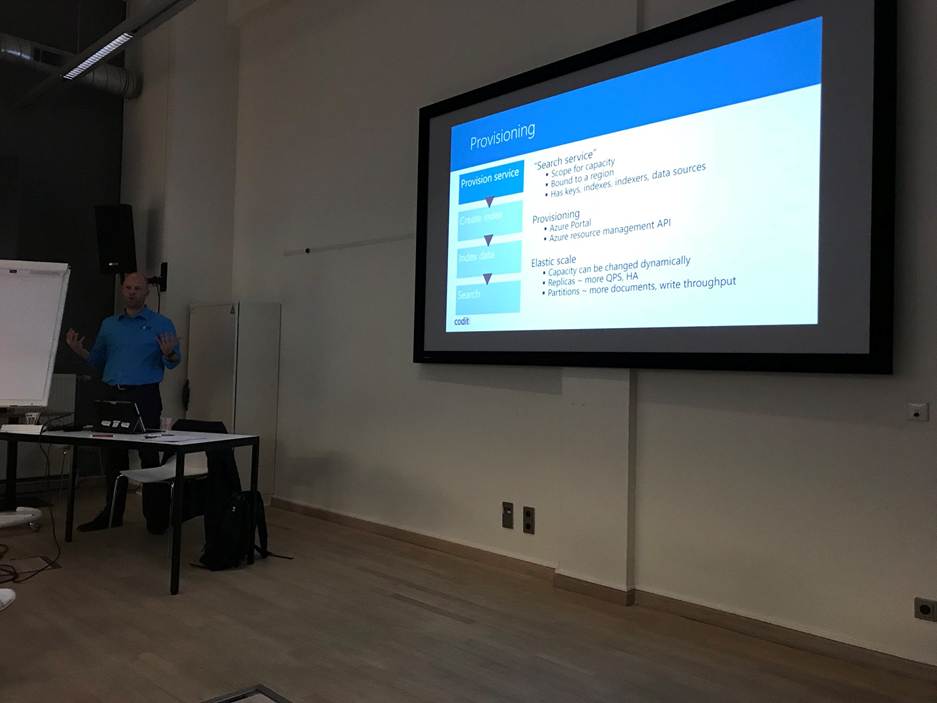
This whole debate reminds me of a scenario I encountered back in 2017. I was working on a proof of concept for a customer, building a future-proof knowledge base using Cosmos DB, the Graph Model, and Search. The operating cost, primarily driven by Cosmos DB, was approximately 1,000 eurosper month. Some developers immediately flagged it as “too expensive,” as I can recall, or even thought I was selling Cosmos DB. The reception, however, wasn’t universally positive. In fact, one attendee later wrote in their blog:

The most uninteresting talk of the day came from Steef-Jan Wiggers , who, in my opinion, delivered an hour-long marketing pitch for CosmosDB. I think it’s expensive for what it currently offers, and many developers could architect something with just as much performance without needing CosmosDB.

However, the proposed solution was for a knowledge base that customers could leverage via a subscription model. The crucial point was that the costs were negligible compared to the potential revenue the subscription model would net for the customer. It was an investment in a revenue-generating asset, not just a pure expense.

The Bottom Line: Innovation vs. Optimization

Thanks to Quinn, I understand that Figma is actively optimizing its infrastructure, transitioning from Ruby to C++ pipelines, migrating workloads, and implementing dynamic cluster scaling. He concluded:

They’re doing the work. More importantly, they’re growing at 46% year-over-year with a 91% gross margin. If you’re losing sleep over their AWS bill while they’re printing money like this, you might need to reconsider your priorities.

The “innovation <-> optimization continuum” is always at play. Companies often prioritize rapid innovation and speed to market, leveraging the cloud for its agility and flexibility. As they scale, they can then focus on optimizing those costs.

This increasing complexity underscores the growing importance of FinOps (Cloud Financial Operations), a cultural practice that brings financial accountability to the variable spend model of cloud, empowering teams to make data-driven decisions on cloud usage and optimize costs without sacrificing innovation.

Figma’s transparency in disclosing its cloud costs is actually a good thing. It forces a much-needed conversation about the true cost of running enterprise-scale infrastructure in 2025. The hyperbolic reactions, however, expose a fundamental misunderstanding of these realities. Which I also encountered with my Cosmos DB project in 2017.

So, the next time someone tells you that a company spending 12% of its revenue on infrastructure that literally runs its entire business is “doomed,” perhaps ask them how much they think it should cost to serve real-time collaborative experiences to 13 million users across the globe. The answer, if based on reality, might surprise them.

Lastly, as the cloud landscape continues to evolve, with new services, AI integration, and shifting geopolitical considerations, the core lesson remains: smart cloud investment isn’t about avoiding the bill, but understanding its true value in driving business outcomes and strategic advantage. The dialogue about cloud costs is far from over, but it’s time we grounded it in reality.

Digital Destiny: Navigating Europe’s Sovereignty Challenge

During my extensive career in IT, I’ve often seen how technology can both empower and entangle us. Today, Europe and the Netherlands find themselves at a crucial junction, navigating the complex landscape of digital sovereignty. Recent geopolitical shifts and the looming possibility of a “Trump II” presidency have only amplified our collective awareness: we cannot afford to be dependent on foreign legislation when it comes to our critical infrastructure.

In this post, I will delve into the threats and strategic risks that underpin this challenge. We’ll explore the initiatives being undertaken at both the European and Dutch levels, and crucially, what the major U.S. Hyperscalers are now bringing to the table in response.

The Digital Predicament: Threats to Our Autonomy

The digital revolution has certainly brought unprecedented benefits, not least through innovative Cloud Services that are transforming our economy and society. However, this advancement has also positioned Europe in a state of significant dependency. Approximately 80% of our digital infrastructure relies on foreign companies, primarily American cloud providers, including Amazon Web Services (AWS), Microsoft Azure, and Google Cloud. This reliance isn’t just a matter of convenience; it’s a strategic vulnerability.

The Legal Undercurrent: U.S. Legislation

One of the most persistent threats to European digital sovereignty stems from American legislation. The CLOUD Act (2018), an addition to the Freedom Act (2015) that replaced the Patriot Act (2001), grants American law enforcement and security services the power to request data from American cloud service providers, even if that data is stored abroad.

Think about it: if U.S. intelligence agencies can request data from powerhouses like AWS, Microsoft, or Google without your knowledge, what does this mean for European organizations that have placed their crown jewels there? This directly clashes with Europe’s stringent privacy regulations, the General Data Protection Regulation (GDPR), which sets strict requirements for the protection of personal data of individuals in the EU.

While the Dutch National Cyber Security Centre (NCSC) has stated that, in practice, the chance of the U.S. government requesting European data via the CLOUD Act has historically been minimal, they also acknowledge that this could change with recent geopolitical developments. The risk is present, even though it has rarely materialized thus far.

Geopolitics: The Digital Chessboard

Beyond legal frameworks, geopolitical developments pose a very real threat to our digital autonomy. Foreign governments may impose trade barriers and sanctions on Cloud Services. Imagine scenarios where tensions between major powers lead to access restrictions for essential Cloud Services. The European Union or even my country cannot afford to be a digital pawn in such a high-stakes game.

We’ve already seen these dynamics play out. In negotiations for a minerals deal with Ukraine, the White House reportedly made a phone call to stop the delivery of satellite images from Maxar Technologies, an American space company. These images were crucial for monitoring Russian troop movements and documenting war crimes.

Another stark example is the Microsoft-ICC incident, where Microsoft blocked access to email and Office 365 services for the chief prosecutor of the International Criminal Court in The Hague due to American sanctions. These incidents serve as powerful reminders of how critical external political pressures can be in impacting digital services.

Europe’s Response: A Collaborative Push for Sovereignty

Recognizing these challenges, both Europe and the Netherlands are actively pursuing initiatives to bolster digital autonomy. It’s also worth noting how major cloud providers are responding to these evolving demands.

European Ambitions:

The European Union has been a driving force behind initiatives to reinforce its digital independence:

  • Gaia-X: This ambitious European project aims to create a trustworthy and secure data infrastructure, fostering a federated system that connects existing European cloud providers and ensures compliance with European regulations, such as the General Data Protection Regulation (GDPR). It’s about creating a transparent and controlled framework.
  • Digital Markets Act (DMA) & Digital Services Act (DSA): These legislative acts aim to regulate the digital economy, fostering fairer competition and greater accountability from large online platforms.
  • Cloud and AI Development Act (proposed): This upcoming legislation seeks to ensure that strategic EU use cases can rely on sovereign cloud solutions, with the public sector acting as a crucial “anchor client.”
  • EuroStack: This broader initiative envisions Europe as a leader in digital sovereignty, building a comprehensive digital ecosystem from semiconductors to AI systems.

Crucially, we’re seeing tangible progress here. Virt8ra, a significant European initiative positioning itself as a major alternative to US-based cloud vendors, recently announced a substantial expansion of its federated infrastructure. The platform, which initially included Arsys, BIT, Gdańsk University of Technology, Infobip, IONOS, Kontron, MONDRAGON Corporation, and Oktawave, all coordinated by OpenNebula Systems, has now been joined by six new cloud service providers: ADI Data Center Euskadi, Clever Cloud, CloudFerro, OVHcloud, Scaleway, and Stackscale. This expansion is a clear indicator that the vision for a robust, distributed European cloud ecosystem is gaining significant traction.

Dutch Determination:

The Netherlands is equally committed to this journey:

  • Strategic Digital Autonomy and Government-Wide Cloud Policy: A coalition of Dutch organizations has developed a roadmap, proposing a three-layer model for government cloud policy that advocates for local storage of state secret data and autonomy requirements for sensitive government data.
  • Cloud Kootwijk: This initiative brings together local providers to develop viable alternatives to hyperscaler clouds, fostering homegrown digital infrastructure.
  • “Reprogram the Government” Initiative: This initiative advocates for a more robust and self-reliant digital government, pushing for IT procurement reforms and in-house expertise.
  • GPT-NL: A project to develop a Dutch language model, strengthening national strategic autonomy in AI and ensuring alignment with Dutch values.

Hyperscalers and the Sovereignty Landscape:

The growing demand for digital sovereignty has prompted significant responses from major cloud providers, demonstrating a recognition of European concerns:

  • AWS European Sovereign Cloud: AWS has announced key components of its independent European governance for the AWS European Sovereign Cloud.
  • Microsoft’s Five Digital Commitments: Microsoft recently outlined five significant digital commitments to deepen its investment and support for Europe’s technological landscape.

These efforts from hyperscalers highlight a critical balance. As industry analyst David Linthicum noted, while Europe’s drive for homegrown solutions is vital for data control, it also prompts questions about access to cutting-edge innovations. He stresses the importance of “striking the right balance” to ensure sovereignty efforts don’t inadvertently limit access to crucial capabilities that drive innovation.

However, despite these significant investments, skepticism persists. There is an ongoing debate within Europe regarding digital sovereignty and reliance on technology providers headquartered outside the European Union. Some in the community express doubts about how such companies can truly operate independently and prioritize European interests, with comments like, “Microsoft is going to do exactly what the US government tells them to do. Their proclamations are meaningless.” Others echo the sentiment that “European money should not flow to American pockets in such a way. Europe needs to become independent from American tech giants as a way forward.” This collective feedback highlights Europe’s ongoing effort to develop its own technological capabilities and reduce its reliance on non-European entities for critical digital infrastructure.

My perspective on this situation is that achieving true digital sovereignty for Europe is a complex and multifaceted endeavor, marked by both opportunities and challenges. While the commitments from global hyperscalers are significant and demonstrate a clear response to European demands, the underlying desire for independent, European-led solutions remains strong. It’s not about outright rejection of external providers, but about strategic autonomy – ensuring that we, as Europeans, maintain ultimate control over our digital destiny and critical data, irrespective of where the technology originates.

Some Cloud IT Trends in 2022

We are a few weeks into 2022, and you might have seen or read articles and reports on trends for this year. I also like to outline the few significant IT trends in this blog post from my point of view based upon my work as Cloud Editor for InfoQ and experiences in the consulting field.

First of all, the importance of Artificial Intelligence (AI). You can see that Microsoft, for example, is structurally building these kinds of capabilities into their entire platform. Its intelligence is increasing rapidly, and you can already see with enterprises that they can quickly make valuable business applications with it.

Microsoft Azure AI Platform

Microsoft is already implementing it in their Azure environment. For example, monitoring users’ login behavior is a straightforward example: they continuously keep track of which user logs in when and from which location. They also immediately pass all the data they collect through an AI robot, which will make connections. Furthermore, other examples are that the company enhanced its Translator service and launched the Azure OpenAI service. And it’s not just Microsoft as other public cloud vendors AWS and Google are on board too.

The second trend I see is that more and more companies are looking at options for customizing applications without really having to program, with no code or low code. This has been in the spotlight for some time now, especially among larger companies that would like to facilitate their so-called citizen developers to develop software for use in their own work.

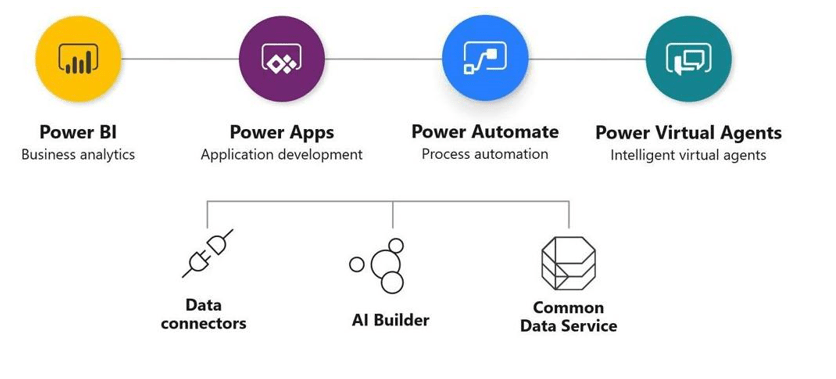
To this end, Microsoft has developed the Power Platform over the past two to three years into a mature low-code platform, which is also interesting for larger organizations. However, you do have to look closely at governance; you can’t just release that completely to users, and you have to build in-game rules, frameworks, and guidelines.

Microsoft Power Platform

We also see increasing adoption of that platform among enterprises, especially with Dynamics 365. The combination of Dynamics 365, Office 365, and Power Platform is becoming a compelling low-code platform for building business applications. Microsoft has an excellent starting position in the low-code market space with competitors like OutSystems, Mendix, and offerings by AWS (HoneyCode, Amplify) and Google (AppSheets). Also, I recommend reading the InfoQ article: Low-Code Platforms and the Rise of the Community Developer: Lots of Solutions, or Lots of Problems?

The third major trend is cloud integration. In recent years, many organizations have moved to the cloud with their applications and data or will move in the wake of COVID-19. Moreover, organizations that have moved to the cloud are now discovering that as you adopt more cloud technology, the need for integration between those systems increases.

Assume you have a CRM from Microsoft, an ERP from SAP, and a data warehouse on Azure. Your business processes run across all those systems. So you must therefore ensure that these systems can exchange data with each other. And you have to make sure that if you have a CRM in the cloud and a customer portal based on customization, you can also see your customer data in that portal. Or some data needs to enter a system on-premise. So, in the end, you need to integrate that!

Therefore, the need for cloud integration is increasing, especially among organizations increasingly investing in the cloud. Microsoft has an answer to that, too, with a perfect and very complete integration platform on Azure named Azure Integration Services (AIS). As a result, even the most demanding enterprises can meet their needs with this.

Azure Integration Services

Recent analyst reports from Gartner and Forrester showed the services are leading. For example, Microsoft was among the leaders in the latest Forrester Wave for Enterprise Integration-Platform-as-a-Service (iPaaS) 2021. In addition, it has been in the leader quadrant of iPaaS reports from Gartner consistently over the last couple of years and that also accounts for API Management.

Lastly, with the last trend, the need for integration increases, and so will the demand for supporting and monitoring them.